The 9800X3D vs 9850X3D question comes up constantly, and it’s easy to see why. The Ryzen 7 9800X3D spent more than a year as the fastest gaming processor money could buy. Then AMD released the Ryzen 7 9850X3D, which looks almost identical on paper. So is the newer chip worth paying more for, or is the original still the smarter buy?
Short answer: they’re the same chip with different boost clocks. The 9850X3D is a few per cent faster in most games and uses noticeably more power to get there. If both cost the same, take the newer one. If the older one is clearly cheaper, it’s the better value.
The specs side by side
| Ryzen 7 9800X3D | Ryzen 7 9850X3D | |
|---|---|---|
| Cores / threads | 8 / 16 | 8 / 16 |
| Base clock | 4.7GHz | 4.7GHz |
| Boost clock | 5.2GHz | 5.6GHz |
| L3 cache | 96MB | 96MB |
| Rated power (TDP) | 120W | 120W |
| Socket / memory | AM5, DDR5 | AM5, DDR5 |
| Released | November 2024 | January 2026 |
Everything that defines these processors is shared: eight Zen 5 cores, the same 96MB of L3 cache with AMD’s 3D V-Cache stacked underneath, the same socket, the same memory support. The only spec that changes is the maximum boost clock, up 400MHz on the newer model.
In practice, the newer part is a better-binned version of the same silicon: AMD picks the chips that can reach higher speeds and sells them as a separate model, much like Intel’s old KS editions.
Gaming performance
This is where expectations need managing. Reviewers found the gap small. In Tom’s Hardware’s head-to-head of the two chips, the newer processor came out ahead in games by only a few per cent overall, with some titles barely moving at all.
That makes sense. Much of what makes X3D processors fast in games is the huge L3 cache, which keeps data close to the cores. Both chips have exactly the same cache, so the clock speed bump only helps in the parts of a game that were limited by raw speed. Our guide to CPU cache explains why that cache matters so much.
The difference shows most at 1080p with a very fast graphics card, where the processor is the bottleneck. At 1440p and 4K, the graphics card does more of the work, and the two chips become practically indistinguishable.
Productivity and everyday work
In lightly threaded tasks, such as some photo editing operations and general snappiness, the higher boost clock gives the 9850X3D a modest lead, roughly in the mid-single digits. In heavily threaded work like rendering and video exports, the two chips are effectively tied, because all eight cores run at similar all-core speeds under sustained load.
Power and heat
Here’s the trade-off. Chasing those higher clocks costs power. Tom’s Hardware measured roughly 30 per cent more power use from the newer chip in its gaming tests, along with slightly higher temperatures. That’s still efficient compared with many competing processors, but it’s a lot of extra power for a few per cent more speed.
The practical takeaway: pair the newer chip with a good cooler, such as a quality dual-tower air cooler or a 240mm liquid cooler, so it can actually sustain its boost. In a cramped case with a basic cooler, it won’t reach its potential, and the gap to the 9800X3D shrinks even further.
Price and value
At launch, AMD priced the 9850X3D only a little above the original. Real-world pricing moves around a lot, though, and the older chip is sometimes discounted more heavily. That’s the whole decision, really:
- Same price, or close to it? Get the 9850X3D. You lose nothing and gain a little.
- Older chip noticeably cheaper? The Ryzen 7 9800X3D is the better value, and you’ll never feel the difference at 1440p or 4K.
- Already own a 9800X3D? Don’t upgrade. Put the money towards a better graphics card instead, where it’ll make a real difference.
Which graphics card pairs well?
With a processor this quick, the graphics card decides your frame rate at 1440p and 4K. An RTX 5070 is a sensible pairing for high refresh 1440p, an RTX 5080 suits 4K or very high frame rates, and an RTX 5090 removes almost every limit. At 1080p, even a mid-range card benefits from an X3D chip’s steady frame times, but you’ll usually get more for your money by spending extra on the graphics card first.
Memory matters a little too. 32GB of DDR5 around 6000MT/s with tight timings is the sweet spot for these chips. The big cache makes them less sensitive to memory speed than most processors, so there’s no need to chase expensive high-speed kits.
Platform and upgrade path
AM5 has been around since 2022, and AMD has said it plans to keep supporting the socket for some time yet. A B850 or X870 motherboard bought today should accept future AMD processors after a BIOS update, which is a nice safety net if you’d like to upgrade the processor later without rebuilding the whole machine. That’s worth factoring in alongside the chip itself.
Overclocking
Both chips can be overclocked thanks to the cache now sitting underneath the cores, and both support AMD’s Precision Boost Overdrive. Several reviewers found a well-tuned 9800X3D can approach the newer chip’s out-of-the-box speeds, which narrows the gap further for enthusiasts. For most people, the default settings are the best balance of speed, heat and stability.
9800X3D vs 9850X3D: the verdict
Both are outstanding gaming processors, and either one will keep a high-end graphics card fed for years. The newer chip is the fastest gaming CPU you can buy, but only just, and it uses more power to claim that title.
If you’re building or ordering a new gaming PC today, the 9850X3D makes sense at a similar price. If you can find the Ryzen 7 9800X3D for meaningfully less, it’s the smarter buy. Either way, spend the bigger share of your budget on the graphics card. That’s where the frame rates come from at higher resolutions.
Which systems use them
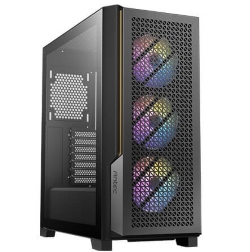
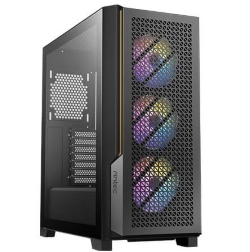
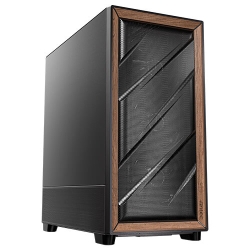
We currently build with the 9850X3D, paired with a proper cooler so it holds its boost under load. You’ll find these and other options in our gaming computers:
Common questions
Is the 9850X3D worth it over the 9800X3D?
Only if the price difference is small. The performance gain is real but modest, typically a few per cent in games.
Do they use the same motherboard?
Yes. Both use AM5 and work on the same motherboards after a BIOS update. Check your board maker’s support list.
Does the 9850X3D run hotter?
A little, because it uses more power at its higher boost clock. A good cooler keeps it comfortable.
Which is better for streaming while gaming?
They’re very close. Both have eight cores, and a modern graphics card can handle stream encoding, so either works well.
How much RAM should I pair with an X3D processor?
32GB of DDR5 is the sweet spot for gaming. Around 6000MT/s with tight timings suits these chips well.
Do I need liquid cooling?
No. A good dual-tower air cooler handles either chip. Liquid cooling helps keep things quieter under heavy, sustained load and looks tidy, but it isn’t required.
Will there be a faster X3D chip soon?
AMD’s next desktop generation is expected in 2027. If you need a PC now, the current X3D chips are excellent and will stay competitive for years.