The RTX 5070 vs 5070 Ti decision looks simple on paper: the Ti is faster and costs more. In practice, it depends on your monitor, the games you play, how long you keep a graphics card and, in 2026, what each one actually sells for on the day. Memory shortages have pushed the Ti’s price around far more than the standard card’s, which changes the value equation a lot.
Short answer: the RTX 5070 is the value pick for 1440p gaming. The RTX 5070 Ti is noticeably faster, with 16GB of memory that suits 4K and heavy ray tracing, but only makes sense if the price gap is reasonable.
The specs side by side
| RTX 5060 | RTX 5070 | RTX 5070 Ti | RTX 5080 | |
|---|---|---|---|---|
| CUDA cores | 3,840 | 6,144 | 8,960 | 10,752 |
| Memory | 8GB GDDR7 | 12GB GDDR7 | 16GB GDDR7 | 16GB GDDR7 |
| Memory bus | 128-bit | 192-bit | 256-bit | 256-bit |
| Bandwidth | 448GB/s | 672GB/s | 896GB/s | 960GB/s |
| Board power | 145W | 250W | 300W | 360W |
| Australian launch price | n/a | From $1,109 | From $1,509 | From $2,019 |
The jump from the standard card to the Ti is substantial: about 46 per cent more CUDA cores, a third more memory and a wider memory bus. The Ti actually shares its chip with the RTX 5080, just with some of it switched off, which is why the two are closer than their names suggest.
5070 vs 5070 Ti: real-world performance
In games, the Ti is typically around 20 per cent faster than the standard card, with the gap widening at 4K and with heavy ray tracing, where its extra memory bandwidth and cores pay off. At 1440p in lighter games, the difference is smaller and both run comfortably above 100 frames per second.
Both cards support DLSS 4.5 and Multi Frame Generation, which can multiply frame rates in supported games. That narrows the practical gap, because the standard card can lean on upscaling to hit high frame rates too. Our guide on what DLSS is explains how that works.
12GB vs 16GB: does the memory matter?
For 1440p gaming today, 12GB is enough in the vast majority of games. Where it can run short is at 4K with maximum textures, in path-traced games, with large texture mods, and in some creative and AI workloads. The Ti’s 16GB gives more headroom for the next few years, which matters if you keep a graphics card a long time.
Power and cooling
The standard card is rated at 250W and NVIDIA recommends a 650W power supply. The Ti draws 300W and pairs best with a 750W supply. Neither is extreme, but check your case airflow and power supply before upgrading, especially from an older card.
5070 vs 5070 Ti for streaming and creative work
Both cards use the same video encoder, so stream quality is identical. The difference shows in creative apps that use the graphics card for rendering, effects and AI features. The Ti’s extra cores finish renders faster, and its 16GB of memory handles larger video and 3D projects without running out. For occasional editing, the standard card is plenty. If you earn a living from creative work, the Ti or a 5080 pays for itself in time saved.
How long will each card last?
Graphics cards usually stay useful for four to six years, gradually moving from high to medium settings as games get more demanding. More memory tends to extend that life, because texture sizes keep growing. That’s the strongest argument for the RTX 5070 Ti: not today’s frame rates, but how gracefully it will age. If you upgrade every couple of years anyway, that matters less, and the cheaper card makes more sense.
Size and noise
Most models of both cards are large, triple-fan designs, often 30cm long or more, so check your case clearance before buying. Because the Ti draws more power, its cooler has more work to do, but quality models of both stay quiet under load. Compact two-fan versions exist for smaller cases, usually running a little warmer and louder.
Prices in 2026
This is where the RTX 5070 vs 5070 Ti decision has changed most. Since early 2026, memory shortages driven by AI demand have hit graphics card prices, and the Ti has been affected more than most. Reports suggested some manufacturers scaled back or ended production of it, and its street price climbed well above launch pricing. The standard card has held much closer to its original price in Australia.
TechSpot tracks graphics card prices across several countries, including Australia, and its latest GPU pricing update shows how far some cards have drifted. NVIDIA’s rumoured “Super” refresh, which might have reshuffled this part of the range, has reportedly been pushed into 2027.
The practical rule: compare the prices on the day. If the RTX 5070 Ti costs a modest amount more, it’s worth it. If the gap is large, the standard card plus DLSS is the smarter buy, and the savings could go towards more memory or storage.
RTX 5070 Ti vs 5080
Since both use the same chip and the same 16GB of memory, the RTX 5070 Ti vs 5080 comparison is closer than you’d expect. The 5080 has around 20 per cent more CUDA cores and is typically 10 to 15 per cent faster in games. If the Ti is priced close to the 5080, the 5080 is the better buy. If the Ti is well below it, the Ti gives most of the performance for less.
RTX 5060 vs 5070
Stepping down, the RTX 5060 vs 5070 gap is large. The standard 5070 has 60 per cent more CUDA cores and 12GB of memory against the 5060’s 8GB. The 5060 is a great 1080p card, but at 1440p with high settings, 8GB can be limiting in newer games. If you’re gaming at 1440p, the 5070 is well worth the step up.
Which should you choose?
- 1080p high refresh: RTX 5060 or RTX 5070.
- 1440p, high settings: RTX 5070, the value sweet spot.
- 1440p at very high refresh rates, or 4K with DLSS: RTX 5070 Ti, if the price is right.
- 4K, heavy ray tracing, long-term headroom: RTX 5080.
Your monitor should guide the choice. Our guide on how to choose a gaming monitor matches resolutions to graphics cards.
Our builds
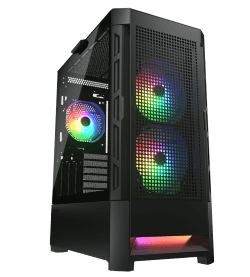
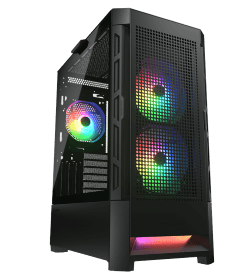
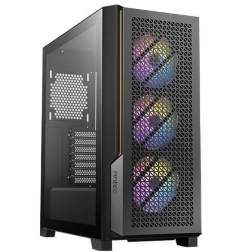
We build with the RTX 5070 for 1440p systems and the RTX 5080 for 4K and high refresh builds, because those two currently offer the clearest value at each tier. You’ll find all of them in our gaming computers:
Graphics card questions
Is the RTX 5070 Ti worth it over the 5070?
If the price gap is modest, yes. It’s faster and has more memory. If the gap is large, the standard card with DLSS is better value.
Is 12GB enough for 1440p?
Yes, for most games today. 16GB gives more room for 4K, mods and the most demanding titles.
Can the RTX 5070 run games at 4K?
Yes, with DLSS upscaling. At native 4K with maximum settings in the newest games, a 5070 Ti or 5080 is more comfortable.
Will graphics card prices drop soon?
Hard to say. Memory supply is expected to stay tight into 2027, so big price drops aren’t likely in the short term.
What power supply do I need?
NVIDIA recommends 650W for the 5070 and 750W for the Ti. Choose a quality unit from a known brand with the right connector for your card.